

Rain, acid rain and hail
- Warning
- Drenched players move more slowly and become more vulnerable to electrical hazards.
- Response
- Use an umbrella for mobile cover or wait inside an enclosed room or the closed van.
Diagnose the van, route your crew and escape the EF5 before the city comes apart. This independent guide tracks the current Early Access build for solo players and teams of up to eight.
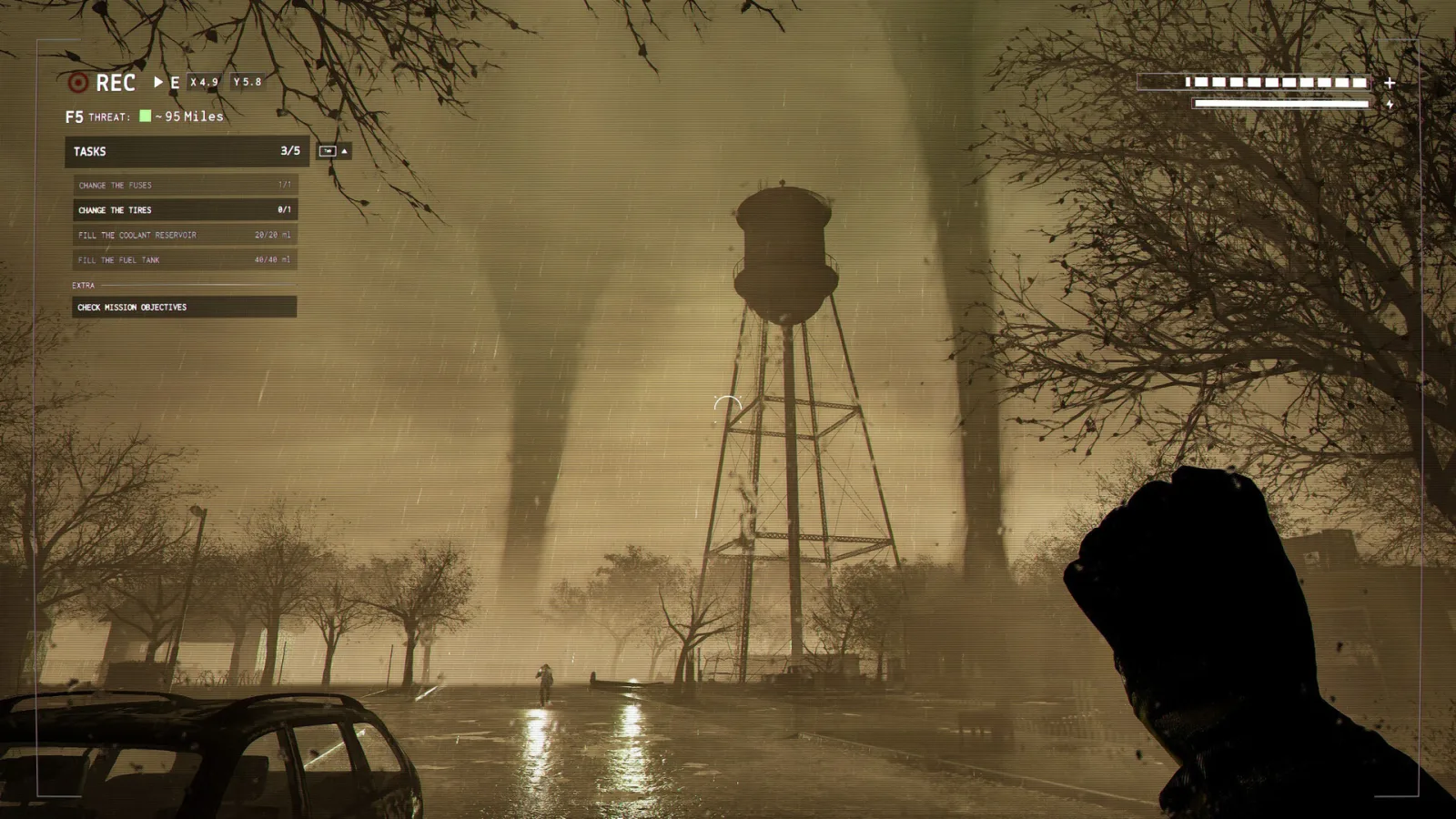 Official game screenshot
Run protocol
A reliable run starts at the ignition, not the nearest loot pile. Finish mandatory work before optional objectives consume the evacuation window.
Turn the key, read every van fault and separate required repairs from optional objectives.
Check the van's tools, split search sectors and stop the crew duplicating the same hunt.
Sweep garages, stations, junkyards and vehicle beds for mission-critical supplies.
Stage heavy parts at the van and complete tool dependencies before weather peaks.
Watch radar, wind and warnings; shorten routes as hazards begin to stack.
Recall the team, close the doors and leave as soon as mandatory repairs are complete.
Start here
Follow the beginner route once, then use the focused guides to tighten repair, loot and recall decisions.
Learn the complete diagnose, scavenge, repair, shelter and escape sequence without chasing optional loot too long.
8 min read
Match each fault to its part, supporting tool and best staging order at the van.
6 min read
Prioritize useful locations, preserve carry capacity and get mission parts home before the route collapses.
7 min read
Respond to rain, hail, lightning and wind escalation with the right shelter and defensive gadget.
7 min read
Use shorter loops, immediate returns and a strict optional-objective cutoff when no teammate can carry for you.
5 min read
Assign sectors, item ownership, escorts and a hard recall threshold before the strongest storm stage.
6 min read
Failure analysis
Most failed escapes are decided before the EF5 reaches the neighbourhood. This Funnel Runners wiki treats the opening minutes as an information problem: identify the van's real needs, keep each search route accountable and stop optional work while there is still time to drive.
A bright loot marker is tempting, but a random useful item is not the same as the part your van requires. Start every Funnel Runners run at the ignition. Read the complete fault list, inspect tools already stored in the vehicle and say the required items out loud. A flat tire changes the plan because the replacement, scissor jack and toolbox form one repair chain. A missing battery, fuel can, oil, coolant or fuse creates a different route. Leaving with an incomplete list produces duplicated searches and late surprises at the van.
Good scavenging is a loop, not a race away from the van. Give each player a sector, a named item and a return condition. Garages deserve early attention for mechanical supplies; fuel stations and vehicle areas answer different needs. When someone finds a heavy mission part, decide who carries it and which path stays clear instead of continuing to widen the search. Solo players should use the same Funnel Runners strategy on a smaller scale: one short building cluster, one immediate deposit, then a fresh decision based on the remaining faults and weather.
The mission board can improve a run, but it cannot repair a van that is still missing mandatory parts. Set a cutoff before the weather becomes frightening. The first escalating warning should shrink search radius; sirens, severe wind, electrical danger or a visible pull toward the storm should end distant looting. Recall the team, finish staged repairs and close the van doors. Funnel Runners rewards crews that leave with unfinished ambitions. A clean escape with less loot is more useful than perfect side progress abandoned under an EF5.
Use the full beginner field manual when you want the complete sequence, including shelter choices, inventory discipline and the final departure check. Every claim that may change during Early Access is kept behind a visible version boundary.
Read the complete first-run planVan quick reference
Use this matrix for route planning. Faults and balance can change during Early Access, so confirm the van display in every run.
| Van problem | Find first | Tool or action | Field note |
|---|---|---|---|
| Flat tire | Replacement tire | Scissor jack and toolbox | The tire can fill your carry capacity. Stage it beside the van and keep the shortest return route clear. |
| Dead battery | Battery | Toolbox; install at the van | Vehicle electronics may be unavailable until the battery is restored. |
| Low fuel | Fuel container | Carry it to the correct van point | Check garages, stations and vehicle areas early instead of widening the route at the last minute. |
| Low oil | Oil | Bring it to the van | Treat it as mission-critical whenever the van lists it as a fault. |
| Low coolant | Coolant | Bring it to the van | Garages are a strong first search location for mechanical supplies. |
| Blown fuse | Fuse | Replace the failed component | A failed fuse can disable vehicle systems until it is replaced. |
Weather response
Weather states combine and intensify. These are defensive responses, not promises of exact event timing or damage values.
Funnel Runners wiki
A compact directory for returning players who already know the run loop and need one answer quickly.
Core repair and scavenging decisions
Weather, solo and team routing
Items, maps, updates and reviewed footage
Current build boundary
Early Access values and behavior can change. We label observations, avoid unverified spawn rates or timings, and never describe announced biomes as currently playable.
Read official Steam updatesEvidence desk
We compare official sources with mechanics-first guides, full runs and solo footage. Each source below is listed for the specific evidence it contributed.
Reviewed for repair dependencies, loot routing, radar colors, storage and shelter demonstrations.
Review sourceReviewed for solo scaling, current progression and the limits of launch content.
Review sourceReviewed for full-run pacing, garage routing and randomized repair pressure.
Review sourceReviewed for group communication, overlapping tasks and escalating storm pressure.
Review sourceReviewed for player language and onboarding expectations, not as an authoritative mechanics source.
Review sourceReviewed for stacked weather states and precipitation-hazard observations.
Review sourceCreators are independent sources in our research sample. Their inclusion does not imply that they endorse this site or every conclusion in this guide.
Field questions
Short answers based on the current Early Access build, with version-sensitive claims kept clearly bounded.
Plan for roughly twenty minutes from diagnosis to escape. Route destruction, repair faults and weather pressure can make an individual run shorter or longer.
Yes. Solo is supported, with fewer van problems and a friendlier item economy for smaller groups. You still handle navigation, carrying, repairs and weather decisions alone.
Turn the key to reveal the van's faults, find the required parts and tools, complete the repairs and drive out before the EF5 reaches the team. Mission-board extras are optional.
The developers describe twelve combinations of rain, hail, acid rain and lightning across three intensities, plus dynamic F1–F5 tornado paths. Exact timing and balance remain version-sensitive.
The current game release is Windows-only and its in-game interface and audio are in English. This independent guide publishes editorial content in English, Traditional Chinese, French and Hungarian.
No. Old West/desert, Snowy Retreat and Midwest Farm are announced roadmap biomes, not current map guides. We will move them into playable coverage only after an official release note confirms them.